Specialities
 Services
 Resource Center
 Pricing
 About
About
 Contact
ICD-10 Implementation
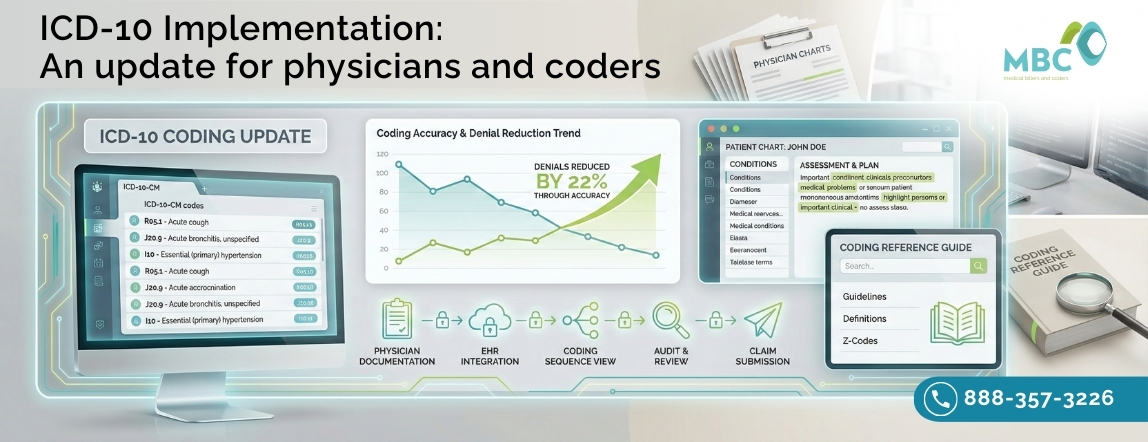
The transition to ICD-10 implementation involves far more than an increase in the number of diagnosis and procedure codes. ICD-10 introduces significantly more detailed and specific code descriptions compared to ICD-9, requiring coders to adapt to new documentation standards and coding logic. As a result, the complexity of this transition is substantial and cannot be overlooked. Without proper planning, training, and execution, medical coders and healthcare organizations may face increased claim denials, coding errors, and revenue disruptions during the transition.
The transition to ICD-10 is much more than a mere increase in codes and field sizes. The descriptions of diagnosis codes in ICD-10 may be very different to what coders are used to seeing and using in ICD-9. Therefore, the complexity in transition is significant and shouldn’t be avoided by medical coders.
An easier and successful transition before October 1, 2013 would require a well planned and efficiently managed implementation process. Although the ICD-10-CM/PCS implementation deadline is two years away, good training plans will ensure a smooth transition for physicians, inpatient and outpatient coders.
Impacting Inpatient Coders:
The ICD-10-CM/PCS final rule estimates that inpatient coders will need 50 hours of training. In order to ensure a successful transition, inpatient coders must:
- Possess sufficient foundational knowledge of the biomedical sciences (e.g., anatomy, physiology, patho physiology, pharmacology, and medical terminology)
- Learn how to apply ICD-10-CM/PCS codes correctly on inpatient encounters
- Understand how to apply maps and crosswalks between ICD-9-CM and ICD-10-CM/PCS
Impacting Outpatient coders:
Outpatient coders would require approximately 16 hours of effective training in ICD-10-CM/PCS, presuming that coders already have the necessary knowledge in biomedical sciences. Other requirements are the same as inpatient coders.
Medical coders need to adhere to the stipulated timeline for the various steps of ICD-9 to ICD-10 transition. Though the first phase is already over, the coders can still take assistance from various online resources and webinars conducted by AMA, AAPC, AAHIMA, and many other associations to get the requisite training and prepare for the transition process. Proper training and guidance in using use ICD- 10 will help coders to remain abreast of the changing industry norms and play a vital role in the implementation process for their employers and clients.
Physicians should keep track of the envisaged timeline for implementation of ICD-10 and prepare their clinic for smooth transition through its various phases:
Phase 1: Implementation plan development and impact assessment (first quarter 2009 to second quarter 2011)
Phase 2: Implementation preparation (first quarter 2011 to second quarter 2013)
Phase 3: “Go live” preparation (first quarter 2013 to third quarter 2013)
Phase 4: follow-up post-implementation (fourth quarter 2013 to fourth quarter 2014)
Physicians should also ensure training for in-house coders, or hire coders trained in using ICD-10, as proper coding is required to keep their revenue cycle efficient and optimized. For physician practices or hospitals facing problems in getting their staff upgraded, outsourcing might be a feasible option.
FAQs
1. What is ICD-10 implementation in medical coding?
ICD-10 implementation refers to the transition from ICD-9 to ICD-10 coding systems, which use more detailed diagnosis and procedure codes for accurate reporting and billing.
2. How long does it take to train coders for ICD-10?
Inpatient coders typically need around 50 hours of training, while outpatient coders usually require about 16 hours, depending on their experience and clinical knowledge.
3. How does ICD-10 impact physicians and practices?
ICD-10 affects documentation requirements, coding accuracy, claim submissions, and reimbursement timelines, making proper preparation essential for revenue cycle stability.
4. What challenges do coders face during ICD-10 transition?
Common challenges include learning new code structures, understanding detailed documentation needs, mapping ICD-9 to ICD-10 codes, and avoiding coding-related denials.
5. Can practices outsource ICD-10 coding support?
Yes, many physician practices and hospitals outsource ICD-10 coding and billing to trained professionals to reduce errors, manage workload, and maintain cash flow.
Catering to more than 40 specialties, Medical Billers and Coders (MBC) is proficient in handling services that range from revenue cycle management to ICD-10 testing solutions. The main goal of our organization is to assist physicians looking for billers and coders, at the same time help billing specialists looking for jobs, reach the right place.