Specialities
 Services
 Resource Center
 Pricing
 About
About
 Contact
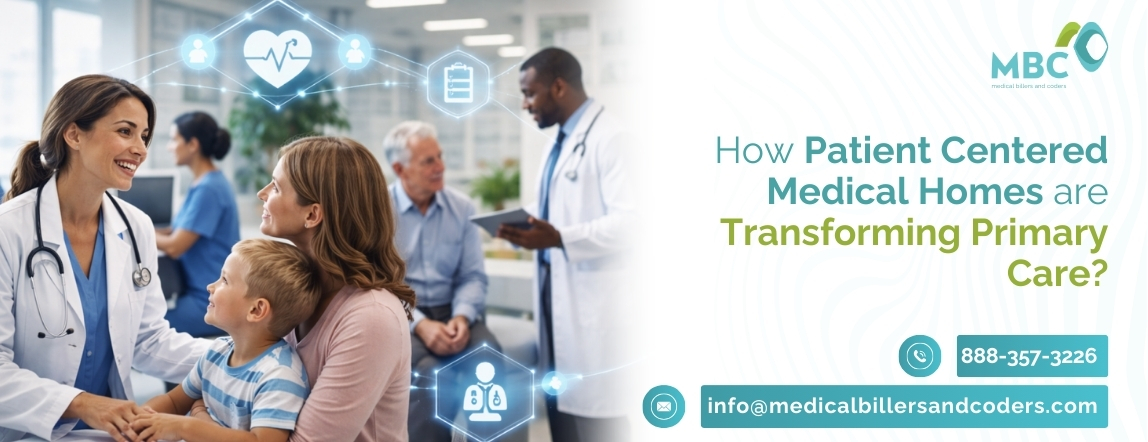
Growing numbers of primary care practices in the US are realizing the importance of the Patient-Centered Medical Home (PCMH) model. It is helping them efficiently deliver the right amount of care to the right patient at the right time.
Through this healthcare setting, primary care physicians have been able to codify and implement care coordination tactics, population health management programs, and various other data-driven, accessible principles of care.
What is the Patient Centered Medical Home Model?
PCMH, a physician-led primary care practice, is transforming the way primary care is organized and delivered in the US. This healthcare setting is not just a place for care provision but also an effective model that provides core functions of primary health care. Through this setting, it has become easy to deliver accessible services with shorter waiting times.
How is PCMH Helping Healthcare?
The PCMH has been helping coordinate care across hospitals, specialty care, community services, and home health care. It has also helped build communication between patients, medical homes, and members of the broader care team.
Benefits of the PCMH Approach
- By organizing and delivering primary care services through the PCMH approach, it becomes easier to improve patient care experience, reduce per capita healthcare costs, and enhance population health. In this setting, care delivery methods and new technologies are adopted to achieve these goals.
- By establishing relationships with patients and their families, primary care is kept patient-centred, accessible, coordinated, and comprehensive. Implementation of this healthcare model helps reduce inpatient visits, thereby reducing overall costs. It also reduces emergency department use and hospital readmissions.
Features of Patient-Centered Medical Homes
- To ensure that Patient Health Information (PHI) is accessible and usable across all stages of healthcare, the PCMH model employs care coordination strategies that combine EHR interoperability, electronic health information exchange (HIE), and population health management analytics.
- A patient-centered approach is used for delivering care. Physicians take cultural values and socio-economic preferences of patients into consideration when developing a meaningful relationship with them and their families.
- Patients are offered comprehensive care through a coordinated care team that focuses on their mental and physical health. This healthcare setting ensures that care is easily accessible to the patients.
- PCMH offers extended hours, an enhanced scheduling process, the use of the latest technology, including mHealth and telehealth, home monitoring, and alternative care sites during an emergency.
The focus of patient-centered medical homes is on quality of care and patient safety. Since clinical decision support tools are used alongside best practices and evidence-based medicines, it becomes easier to provide a safe and satisfactory experience for each patient.
Medical Billing for PCMH
Practices that decide to embrace the PCMH model will need to train their billing staff to handle the changes. Since providing medical home care requires time and dedication, many such practices outsource their billing to companies like Medical Billers and Coders (MBC) to maximize revenue and minimize claim denial rates. MBC has a team of skilled billers and coders who are well-trained to handle billing complexities across various medical specialties.
How Medical Billers and Coders (MBC) Support Primary Care Physicians Under the PCMH Model
As primary care practices transition to the Patient-Centered Medical Home model, primary care medical billing becomes more complex and data-driven. Care coordination, chronic care management, preventive services, and population health initiatives must be accurately coded and billed to ensure proper reimbursement.
Medical Billers and Coders (MBC) help primary care physicians by:
- Ensuring accurate coding and billing for PCMH-related services, including care coordination, preventive visits, and value-based care components
- Reducing claim denials through clean claim submission aligned with payer-specific PCMH guidelines
- Managing evolving billing requirements tied to EHR interoperability, quality reporting, and population health programs
- Improving cash flow and revenue predictability by optimizing the entire revenue cycle
- Allowing physicians to focus on patient care, not administrative and billing complexities
With a dedicated team experienced in primary care medical billing, MBC helps practices fully realize the financial benefits of the PCMH model while maintaining compliance and efficiency.
If your primary care practice is adopting or operating under the Patient-Centered Medical Home (PCMH) model, your billing strategy must evolve with it.
Partner with Medical Billers and Coders (MBC) to streamline your primary care medical billing, reduce claim denials, and maximize revenue—while you focus on delivering high-quality, patient-centered care.
Contact MBC today at 888-357-3226
Let MBC handle the billing—so your practice can focus on better outcomes, better experiences, and better financial performance.
FAQs
The PCMH model is a physician-led approach to delivering accessible, coordinated, and comprehensive primary care. It emphasizes patient-centered services that improve care quality, reduce healthcare costs, and enhance the patient experience.
The PCMH model improves care delivery by coordinating services across hospitals, specialty care, community services, and home healthcare. It leverages advanced technologies, including EHR interoperability, health information exchange (HIE), and population health analytics, to ensure accessible, efficient care.
The PCMH model improves patient care by fostering better communication, reducing inpatient visits, decreasing emergency department usage, and lowering hospital readmissions. Practices benefit from cost savings and enhanced patient satisfaction through better care coordination and reduced claim denials.
Transitioning to the PCMH model requires adjustments in medical billing to accommodate new care delivery methods and technologies. Practices need trained billing staff to manage these changes effectively, or they can outsource billing tasks to specialists such as Medical Billers and Coders to ensure accurate claims and reduce denials.
Outsourcing billing for the PCMH model helps practices focus on patient care while ensuring efficient revenue cycle management. Expert billing companies, such as Medical Billers and Coders, handle the complexities of PCMH billing, reduce claim denials, and maximize revenue collection for practices.
Catering to more than 40 specialties, Medical Billers and Coders (MBC) is proficient in handling services that range from revenue cycle management to ICD-10 testing solutions. The main goal of our organization is to assist physicians looking for billers and coders, at the same time help billing specialists looking for jobs, reach the right place.