Your 90-Day AR Analysis is complimentary - See your true collection gap.

Revenue Cycle Management (RCM)

What Are the Best Practices for Revenue Cycle Management in Multi-Specialty Groups?

What Are the Best Practices for Revenue Cycle Management in Multi-Specialty Groups?
Revenue cycle management for multi-specialty groups optimizes financial performance through coordinated billing processes, specialty-specific coding expertise, and integrated technology solutions that reduce claim denials and accelerate reimbursements across all departments. Managing finances across multiple medical specialties presents unprecedented challenges. When dermatology, cardiology, neurology, and primary care operate under one practice umbrella, each department brings unique […]

Read More.. What Are the Best Practices for Revenue Cycle Management in Multi-Specialty Groups?

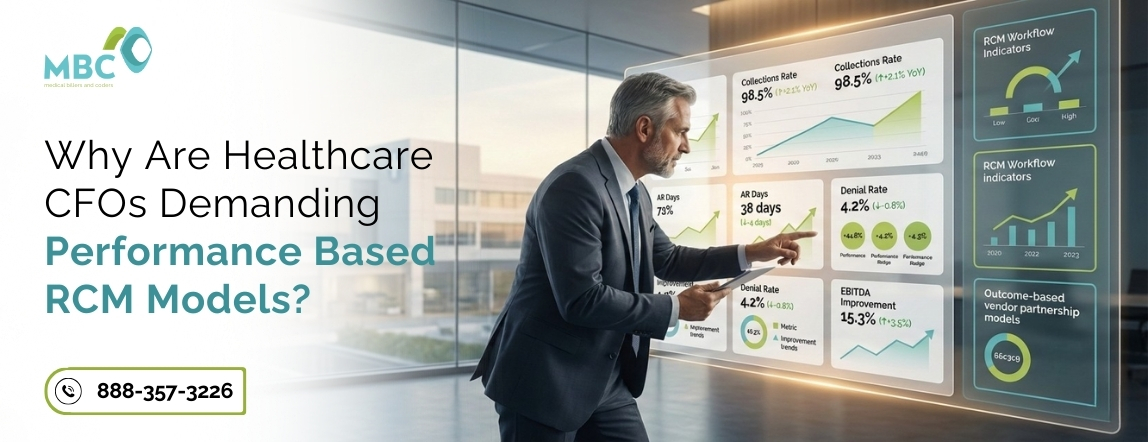
Why Are Healthcare CFOs Demanding Performance Based RCM Models?

Why Are Healthcare CFOs Demanding Performance Based RCM Models?

Performance Based RCM eliminates the misaligned incentives of percentage-pricing by tying vendor compensation directly to Net Collection Ratio improvement, Days in AR reduction, and quantified revenue recovery—delivering $340K-$680K in incremental margin protection that traditional RCM services cannot achieve through transactional claim processing. The $520K Problem with Traditional Revenue Cycle Management Pricing Your facility pays 6% […]

Read More.. Why Are Healthcare CFOs Demanding Performance Based RCM Models?

Is Your Strategic Revenue Diagnostic Revealing Hidden Margin Erosion?

Is Your Strategic Revenue Diagnostic Revealing Hidden Margin Erosion?

A Strategic Revenue Diagnostic exposes the operational blind spots causing multi-specialty groups to lose $340K-$680K annually despite increasing case volumes—transforming surface-level RCM metrics into actionable facility-specific intelligence that protects enterprise value. Revenue Performance Paradox Destroying Multi-Specialty Margins Your dashboard shows 18% volume growth. Your Net Collection Ratio sits at 91%. Payer mix appears stable. Yet […]

Read More.. Is Your Strategic Revenue Diagnostic Revealing Hidden Margin Erosion?

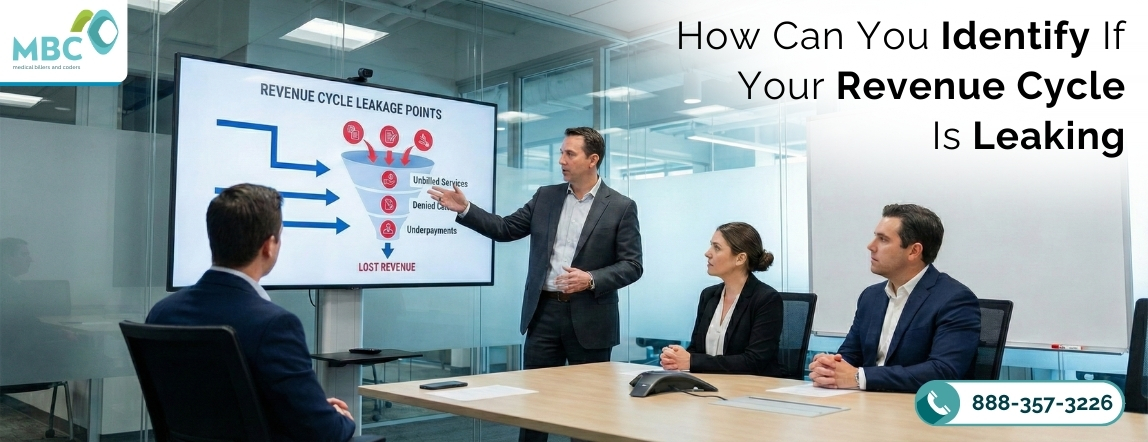
How Can You Identify If Your Revenue Cycle Is Leaking and Where Money Is Actually Going?

How Can You Identify If Your Revenue Cycle Is Leaking

Your revenue cycle is leaking—and the answer is that most healthcare organizations are losing 8-12% of earned revenue through preventable denials, payer underpayments, aging accounts receivable, and operational inefficiencies, but they don’t know it’s happening because the bleeding occurs invisibly across thousands of denied claims and systematic payer underpayments buried in spreadsheets. When your revenue […]

Read More.. How Can You Identify If Your Revenue Cycle Is Leaking and Where Money Is Actually Going?

Is Outsourced RCM the Financial Solution Your Practice Needs? The Data Says Yes. 

Is Outsourced RCM the Financial Solution Your Practice Needs? The Data Says Yes.

The Bottom Line on Outsourced RCM Yes, outsourced RCM is a proven financial solution that reduces operational costs by 30-40% while improving collection rates for healthcare practices of all sizes.  Cost to collect:$2.00-$3.50 per $100 (outsourced) vs. $3.50-$5.50 (in-house) Denial rates:<5% (outsourced) vs. 9-15% national average Days in AR improvement:12-18 daysfaster with professional RCM  The […]

Read More.. Is Outsourced RCM the Financial Solution Your Practice Needs? The Data Says Yes. 

Is Your Revenue Cycle Management Ready for 2026? A Complete Readiness Assessment

Is Your Revenue Cycle Management Ready for 2026

Revenue Cycle Management Ready for 2026: What Has Changed and Why It Matters Revenue cycle management in 2026 looks fundamentally different from even two years ago. Organizations that are thriving today are not simply processing claims faster. They are preventing denials before submission, predicting payer behavior, and treating patient billing as a strategic, enterprise-level function. […]

Read More.. Is Your Revenue Cycle Management Ready for 2026? A Complete Readiness Assessment

Can Enterprise-Level BI Dashboards Eliminate Payer Variance and Protect Your Bottom Line?

Can Enterprise-Level BI Dashboards Eliminate Payer Variance and Protect Your Bottom Line

Yes—Enterprise-Level BI Dashboards Provide Real-Time Intelligence That Identifies and Eliminates Payer Variance Before It Impacts Revenue Enterprise-Level BI Dashboards eliminate payer variance by providing institutional oversight of your entire RCM ecosystem. You cannot manage what you cannot see. Without real-time visibility into payer performance, denial patterns, and revenue leakage, health systems operate blindly, discovering revenue […]

Read More.. Can Enterprise-Level BI Dashboards Eliminate Payer Variance and Protect Your Bottom Line?

What is Your True Cost-to-Collect?

What is Your True Cost-to-Collect?

Your true Cost-to-Collect is the total expense your organization incurs to collect every dollar of revenue, calculated by dividing total revenue cycle costs by patient service cash collected—and it likely includes hidden expenses you’re not tracking that push you well above the industry-leading benchmark of 2%. Most medical groups think they know their collection costs, […]

Read More.. What is Your True Cost-to-Collect?

How Can RCM for the Modern Enterprise Improve Yield?

How Can RCM for the Modern Enterprise Improve Yield

RCM for the Modern Enterprise improves yield by systematically reducing Total Cost-to-Collect (TCC) from 12-14% to 4-8% while maximizing Net Realized Yield (NRY) from 85-92% to 95-98% through integrated financial optimization, continuous regulatory compliance, and intelligent automation. A high-velocity Revenue Cycle Management (RCM) for the Modern Enterprise infrastructure prevents revenue leakage before it occurs, addressing […]

Read More.. How Can RCM for the Modern Enterprise Improve Yield?

How Can the Revenue Integrity Framework Prevent Revenue Leakage and Improve Financial Performance?

How Can the Revenue Integrity Framework Prevent Revenue Leakage and Improve Financial Performance

Healthcare organizations can prevent revenue leakage by implementing the MBC Revenue Integrity Framework—a proactive quality discipline that systematically eliminates income loss through three strategic pillars: Financial Performance, Risk Mitigation, and Technological Efficiency. The MBC Revenue Integrity Framework achieves a 14% improvement in net collection ratio, a 22% reduction in days in A/R, and recovers $600K-$2M […]

Read More.. How Can the Revenue Integrity Framework Prevent Revenue Leakage and Improve Financial Performance?
888-357-3226