Your 90-Day AR Analysis is complimentary - See your true collection gap.

Other

Payer-Specific Denial Patterns: How UHC and BCBS Are Denying Claims in 2026

Payer-specific denial patterns (UHC_BCBS)

Payer-specific denial patterns are the systematic, repeatable ways individual payers deny claims — distinct denial triggers, CARC codes, and adjudication behaviors that differ materially between UnitedHealthcare and Blue Cross Blue Shield and cannot be addressed with a generic denial management workflow. According to MBC’s 2026 denial management analysis across 240 specialty practices, UHC generates 2.3× […]

Read More.. Payer-Specific Denial Patterns: How UHC and BCBS Are Denying Claims in 2026

Which Wound Care Nursing Facility Billing Mistakes Kill Your Clean Claims?

Which Wound Care Nursing Facility Billing Mistakes Kill Your Clean Claims?

Wound care nursing facility billing loses clean claim status the moment one of six specific, entirely preventable mistakes enters the workflow — and unlike other specialties, most of these errors don’t just generate a denial, they generate an audit flag that follows the facility for 36 months. Here’s what makes this particularly painful for revenue […]

Read More.. Which Wound Care Nursing Facility Billing Mistakes Kill Your Clean Claims?

Is Value-Based Documentation Replacing Volume-Based Billing in 2026?

Is Value-Based Documentation Replacing Volume-Based Billing in 2026

Yes, value-based documentation is systematically replacing volume-based billing in 2026—with CMS establishing dual conversion factors creating a 0.51% payment differential ($170,000–$306,000 annually for practices collecting $3M–$5M+ monthly) favoring Advanced APM participants, introducing Advanced Primary Care Management codes eliminating time-based documentation requirements, and implementing AI-driven claim scrutiny that penalizes volume-focused documentation patterns—forcing primary care practices to […]

Read More.. Is Value-Based Documentation Replacing Volume-Based Billing in 2026?

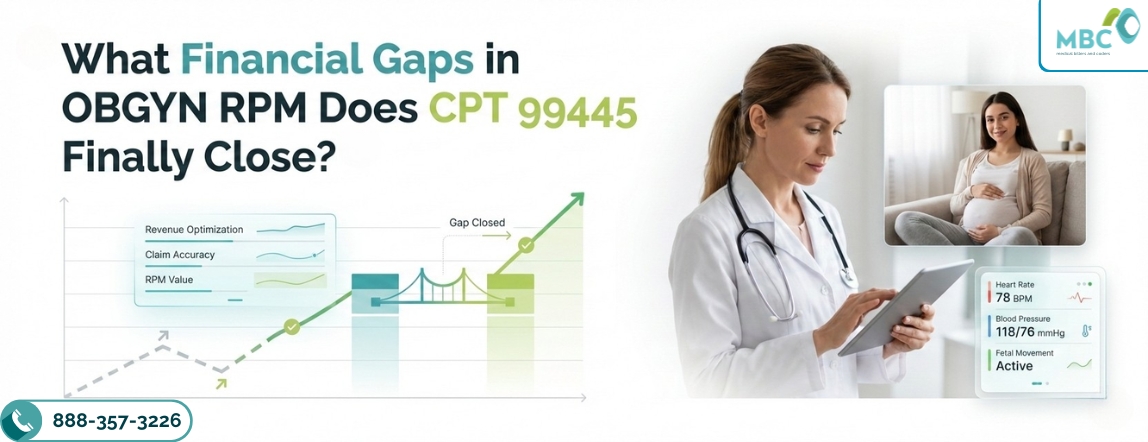
What Financial Gaps in OBGYN RPM Does CPT 99445 Finally Close?

What Financial Gaps in OBGYN RPM Does CPT 99445 Finally Close

CPT 99445 closes the financial gaps in OBGYN RPM by enabling reimbursement for interprofessional telephone/internet/EHR consultations between treating obstetricians and specialists—specifically addressing the $1.2M–$3.8M annual revenue leakage OBGYN practices collecting $1M–$5M+ monthly previously absorbed when coordinating high-risk pregnancy care, managing postpartum complications, and consulting maternal-fetal medicine specialists without a billable code for the 15–30 minute […]

Read More.. What Financial Gaps in OBGYN RPM Does CPT 99445 Finally Close?

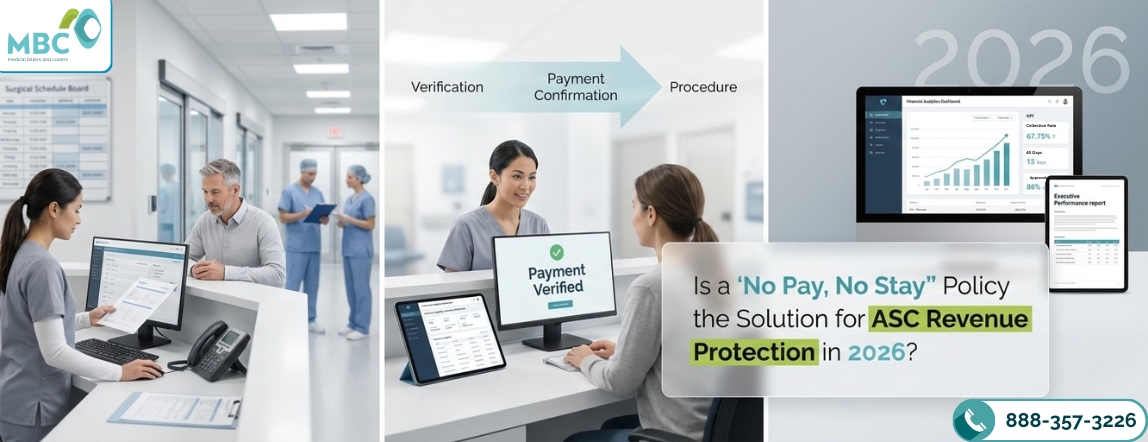
Is a “No Pay, No Stay” Policy the Solution for ASC Revenue Protection in 2026?

Is a ‘No Pay, No Stay’ policy the solution for ASC revenue protection in 2026

A “No Pay, No Stay” policy—requiring verified insurance eligibility and upfront patient financial clearance before elective procedure scheduling—is a partial but essential component of ASC revenue protection in 2026, because with 560 new procedures added to the ASC Covered Procedures List, a 2.6% Medicare payment update, and accelerating site-of-service migration creating $1.2M–$3.8M in new annual […]

Read More.. Is a “No Pay, No Stay” Policy the Solution for ASC Revenue Protection in 2026?

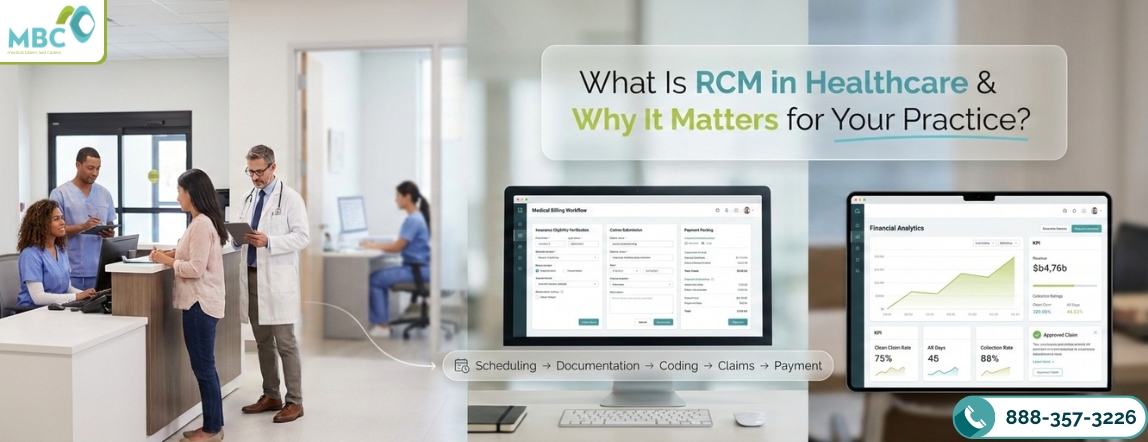
What Is RCM in Healthcare and Why It Matters for Your Practice?

What Is RCM in Healthcare and Why It Matters for Your Practice?

RCM in healthcare is the financial process that manages patient care episodes from registration through final payment, ensuring healthcare providers receive accurate reimbursement for their services. With median hospital operating margins below 3% and 40% of hospitals reporting negative margins in Q1 2026, effective revenue cycle management has never been more critical for financial survival. […]

Read More.. What Is RCM in Healthcare and Why It Matters for Your Practice?

Denial Automation & Prevention: Stop Revenue Leakage Before Claims Are Submitted

Denial Automation & Prevention: Stop Revenue Leakage Before Claims Are Submitted

Denial automation & prevention is a proactive financial strategy that uses AI and machine learning to identify and resolve insurance claim errors before submission to payers, reducing costly rejections and accelerating revenue cycle efficiency. The healthcare revenue cycle has reached a breaking point. With claim denials reportedly quadrupling since 2018, providers are losing billions of […]

Read More.. Denial Automation & Prevention: Stop Revenue Leakage Before Claims Are Submitted

Dermatology RCM in Delaware: Top Ways to Boost Cosmetic Revenue

Dermatology RCM in Delaware_ Top Ways to Boost Cosmetic Revenue

Dermatology RCM in Delaware requires mastering a unique financial balancing act that few other specialties face: managing medical insurance billing for conditions like acne, psoriasis, and skin cancer alongside cash-based cosmetic services like Botox, fillers, laser treatments, and chemical peels. While most dermatology practices focus heavily on insurance reimbursement, the real revenue growth opportunity lies […]

Read More.. Dermatology RCM in Delaware: Top Ways to Boost Cosmetic Revenue

Mastering DRG Coding: Ensuring Accurate Hospital Billing Under New CMS Rules

Mastering DRG Coding Ensuring Accurate Hospital Billing Under New CMS Rules

Accurate hospital billing is the backbone of financial stability for healthcare providers. With CMS rolling out new rules for 2025, hospitals must refine their DRG (Diagnosis-Related Group) coding processes to prevent revenue loss and ensure compliance. DRG coding plays a vital role in determining reimbursements, and even minor inaccuracies can lead to claim denials, audits, […]

Read More.. Mastering DRG Coding: Ensuring Accurate Hospital Billing Under New CMS Rules

Identify Coding Pitfalls to Avoid Common Claim Errors

Identify Coding Pitfalls to Avoid Common Claim Errors

Coding errors accounted for 8.7 percent of improper payments made by Medicare in 2018, which cost over $2.75 billion. To avoid costly denials and potential payback demands, it’s essential to review code guidelines before submitting your claims. MBC helps many practices to pinpoint the coding issues so that there will be no  Common Claim Errors. […]

Read More.. Identify Coding Pitfalls to Avoid Common Claim Errors
888-357-3226