Your 90-Day AR Analysis is complimentary - See your true collection gap.

Revenue Cycle Management (RCM)

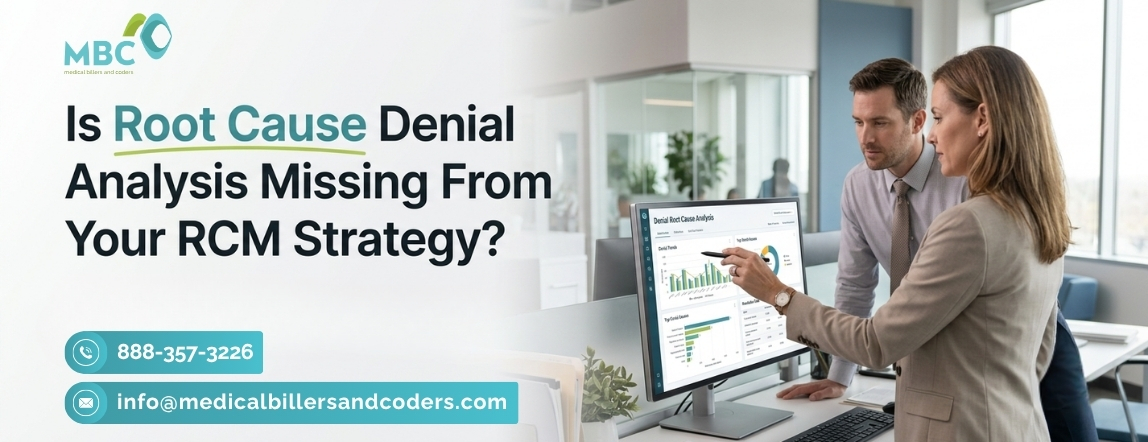
Is Root Cause Denial Analysis Missing From Your RCM Strategy?

Is Root Cause Denial Analysis Missing From Your RCM Strategy?

Yes, for most healthcare organizations, Root Cause Denial Analysis is missing, and that gap is exactly why the same denials keep resurfacing month after month. It is the practice of tracing every denied claim back to the operational or clinical breakdown that caused it, rather than reworking the claim and moving on. Most facilities treat […]

Read More.. Is Root Cause Denial Analysis Missing From Your RCM Strategy?

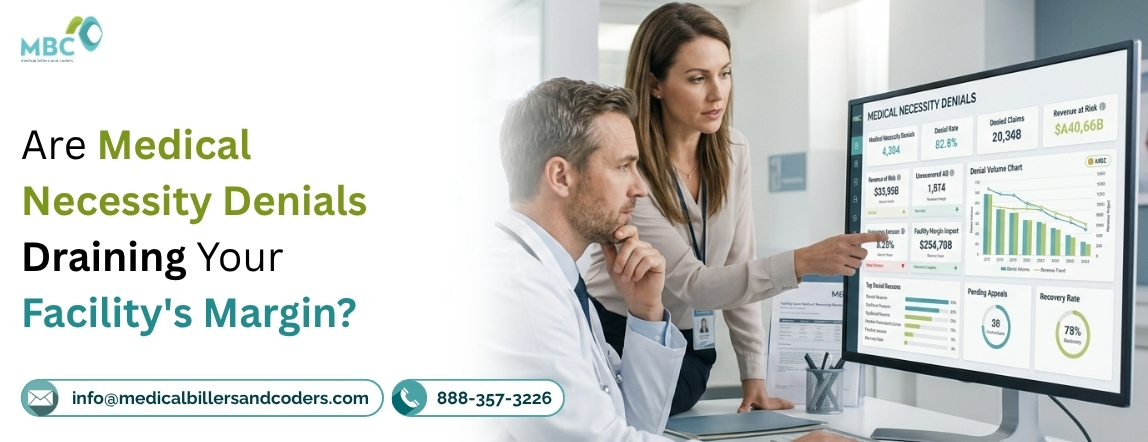
Are Medical Necessity Denials Draining Your Facility’s Margin?

Are Medical Necessity Denials Draining Your Facility’s Margin?

Yes, for most multi-provider practices and facilities, medical necessity denials are one of the largest, most preventable sources of revenue leakage on the books. They happen when a payer decides that the documentation submitted doesn’t justify the service billed, even when the care itself was completely appropriate. The result is a stalled claim, a frustrated […]

Read More.. Are Medical Necessity Denials Draining Your Facility’s Margin?

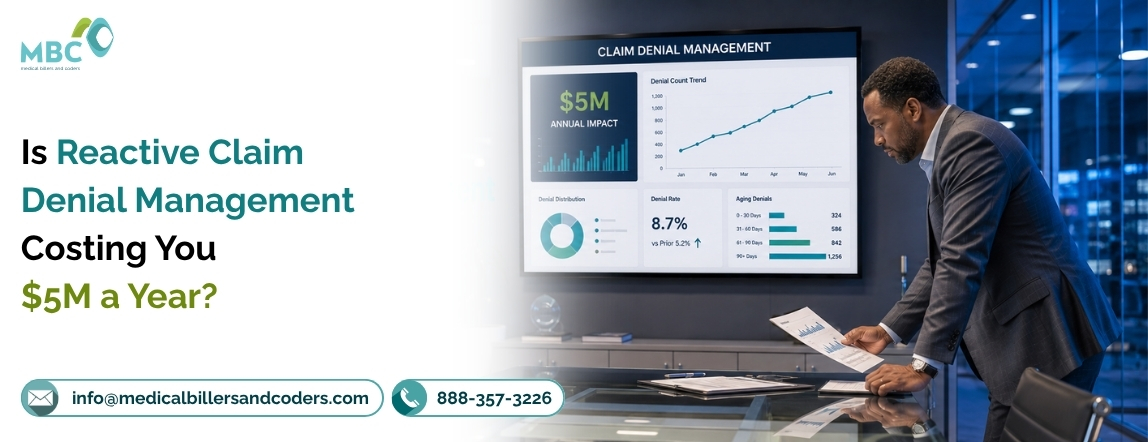
Is Reactive Claim Denial Management Costing You $5M a Year?

Is Reactive Claim Denial Management Costing You $5M a Year?

Yes, for a mid-size multi-site health system, reactive claim denial management can realistically cost $5 million or more a year once you add up unrecovered write-offs, rework labor, delayed cash flow, and the staff hours spent fighting the same denials over and over. Most facilities never see the full number because it’s scattered across a […]

Read More.. Is Reactive Claim Denial Management Costing You $5M a Year?

Revenue Cycle Management Trends Every Healthcare CFO Should Know

Revenue Cycle Management Trends Every Healthcare CFO Should Know

The Revenue Cycle Management trends defining healthcare finance right now come down to one number: $28.83 billion. That is the amount CMS reported in improper Medicare Fee-for-Service payments for fiscal year 2025, and it is the clearest signal yet that the old way of running a billing department will not protect margins going forward. For […]

Read More.. Revenue Cycle Management Trends Every Healthcare CFO Should Know

AI in Revenue Cycle Management: Myth vs Reality

AI in Revenue Cycle Management: Myth vs Reality

AI in Revenue Cycle Management is not a magic fix that replaces your billing team overnight — it is a governed, data-driven layer that predicts denials, automates prior authorizations, and protects margins when it is implemented correctly. That single distinction separates the organizations seeing real returns from the ones stuck paying for software nobody trusts. […]

Read More.. AI in Revenue Cycle Management: Myth vs Reality

Choosing the Right RCM Model for Multi Site Practices

Choosing the Right RCM Model for Multi Site Practices

The right RCM Model for Multi Site Practices is rarely a single, one-size-fits-all choice. It’s a structure built around how many locations you run, how many payers you touch, and how fast you’re adding sites. For most groups with three or more locations, a hybrid revenue cycle management structure that centralizes coding, denial management, and […]

Read More.. Choosing the Right RCM Model for Multi Site Practices

How Multi Location RCM Optimization Protects Healthcare EBITDA?

How Large Medical Groups Recover Millions in Underpayments?

Multi Location RCM Optimization protects healthcare EBITDA by standardizing coding, denial management, and payer contract execution across every site so that margin leakage at one location doesn’t quietly erode group-wide profitability. For a multi-site group running six locations at $2M in average site revenue, a 3-point swing in Net Collection Ratio between the best and […]

Read More.. How Multi Location RCM Optimization Protects Healthcare EBITDA?

CO 50 Denial: Medical Necessity Gap or Documentation Failure?

CO 50 Denial: Medical Necessity Gap or Documentation Failure?

A CO 50 denial means the payer has decided your claim doesn’t meet its medical necessity criteria, but the fix depends entirely on which problem you’re actually facing. A true medical necessity gap means the diagnosis genuinely doesn’t support the service billed, and no amount of paperwork will change that. A documentation failure means the […]

Read More.. CO 50 Denial: Medical Necessity Gap or Documentation Failure?
888-357-3226